Most people think cooking is about recipes.
Follow the steps. Measure everything. Don’t mess it up.
That’s what they’ve been taught.
But that’s not how real cooking works.
Because at some point… the recipe runs out.
And when it does?
All you’ve got left is judgment.
Look at any plate that’s done right—you’re not looking at a recipe, you’re looking at decisions.
What do people think the real skill in cooking is?
They think it’s technique.
Knife cuts. Searing. Timing. Plating.
And don’t get me wrong—that matters.
But technique without judgment?
That’s just someone following instructions really well.
That’s not someone who can actually cook.
If you’ve been in the kitchen long enough, you already know that [following a recipe and actually cooking] are two very different things.
So what is judgment in cooking?
Judgment is knowing what to do when there are no instructions left.
It’s not written down anywhere.
It shows up in moments like:
- Knowing something needs more salt before you even taste it
- Letting something ride because you feel it’s not ready
- Turning the heat down without thinking about it
- Changing direction mid-dish without panicking
You don’t learn that from recipes.
You build that over time.
What that actually looks like on the plate
Most of the food I’ve cooked over the years was never written down.
No recipes. No measurements. No step-by-step.
Just what I had in front of me… and what I felt like doing with it.
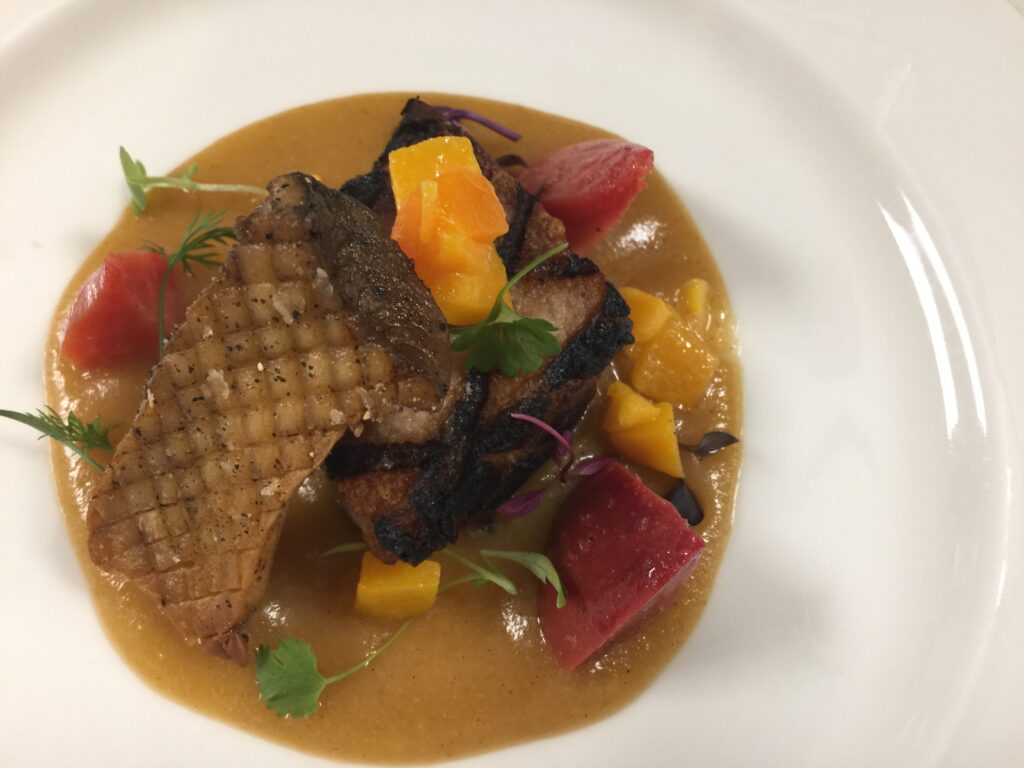
A plate might come together like this:
Grilled pork belly for richness.
Tamarind to bring acid and depth.
Roasted beet for sweetness and earth.
King trumpet mushroom for texture and balance.
Nothing forced. Nothing overthought.
Just decisions stacking on top of each other until it made sense.
That’s what judgment looks like in real time.
When does judgment actually show up?
When things don’t go according to plan.
And they never do.
- The pan’s hotter than you expected
- The ingredient isn’t what you thought it was
- Timing gets thrown off
- The kitchen doesn’t cooperate
That’s where most people freeze.
That’s where cooks hesitate.
That’s where chefs adjust.
And truth be told, [most cooking mistakes aren’t technical]—they come down to decision-making in the moment.
Why don’t people talk about judgment?
Because you can’t package it.
You can sell a recipe.
You can teach a technique.
But judgment?
That comes from:
- Reps
- Mistakes
- Pressure
- Responsibility
You earn that.
Nobody can hand it to you.
What does judgment feel like in the kitchen?
It’s quiet.
No panic. No second guessing.
Just:
👉 “Give it 30 more seconds.”
👉 “Turn that down.”
👉 “That’s done.”
And you move.
That only comes with time… and [experience changes how you taste] in ways most people don’t even realize.
How do you build judgment as a cook?
You don’t get it from reading.
You get it from doing.
Over and over again.
But more importantly—
You have to pay attention while you’re doing it.
- Taste everything
- Watch how things change
- Notice what heat is actually doing
- Learn from what didn’t work, not just what did
That’s how it starts to click.
What’s the real difference between a cook and someone following recipes?
A recipe follower needs instructions.
A cook makes decisions.
A chef?
Makes decisions when it matters.
Closing
Nobody really talks about judgment because it’s not flashy.
You can’t post it. You can’t measure it.
But it’s the difference between:
Cooking something…
And actually knowing what you’re doing.