Flavor isn’t about adding more—it’s about control.
Building flavor layers without overcomplicating a dish comes down to control—knowing what to add, when to add it, and when to stop so the dish stays clear, balanced, and intentional.
Where I Learned This
I learned this watching my mom and dad cook.
And again—growing up in a Black household, seasoning was never the issue.
What I was really watching was:
- how they built flavor before the dish even came together
- how they let ingredients develop instead of forcing them
- how they didn’t rush the process
- how they knew when to leave things alone
Going around the neighborhood with my dad, tasting other people’s food—curry goat, red beans and rice—talking to people, learning from them.
My grandfather getting BBQ pork shipped from North Carolina with that vinegar-based sauce and red chili flake.
That’s where I understood:
👉 flavor is history
👉 flavor is patience
👉 flavor is built
And it ties directly into How Experience Changes the Way You Taste.
What Most People Get Wrong
Most people think layering flavor means adding more.
More spices.
More sauces.
More everything.
But what actually happens:
- the dish gets crowded
- flavors compete instead of work together
- nothing stands out
Or worse:
👉 it’s so simple there’s nothing memorable
The real problem?
👉 no structure
👉 no direction
Which is why dishes feel off—even when everything is technically right—and it’s something I break down in Why Most Cooking Mistakes Aren’t Technical.
What’s Actually Happening
Layering flavor is controlled development.
It starts with:
- the idea
- the experience
- the end goal
Then builds through:
- fat
- heat
- aromatics
- acid
And finishes with:
- contrast
- texture
- clarity
Every decision matters.
How I Do It
I keep it simple:
- start with the story
- choose the right product
- build step-by-step
- balance with acid
- finish clean
I’m always asking:
- does this need to be here?
- is this helping or hurting?
I want the dish to feel familiar—but still make you think.
How to Fix It
If a dish feels off:
- stop adding
- taste what’s there
- identify what’s missing
Most of the time:
- needs salt
- needs acid
- needs heat control
That’s it.
That connects directly to How to Fix a Dish Without Starting Over.
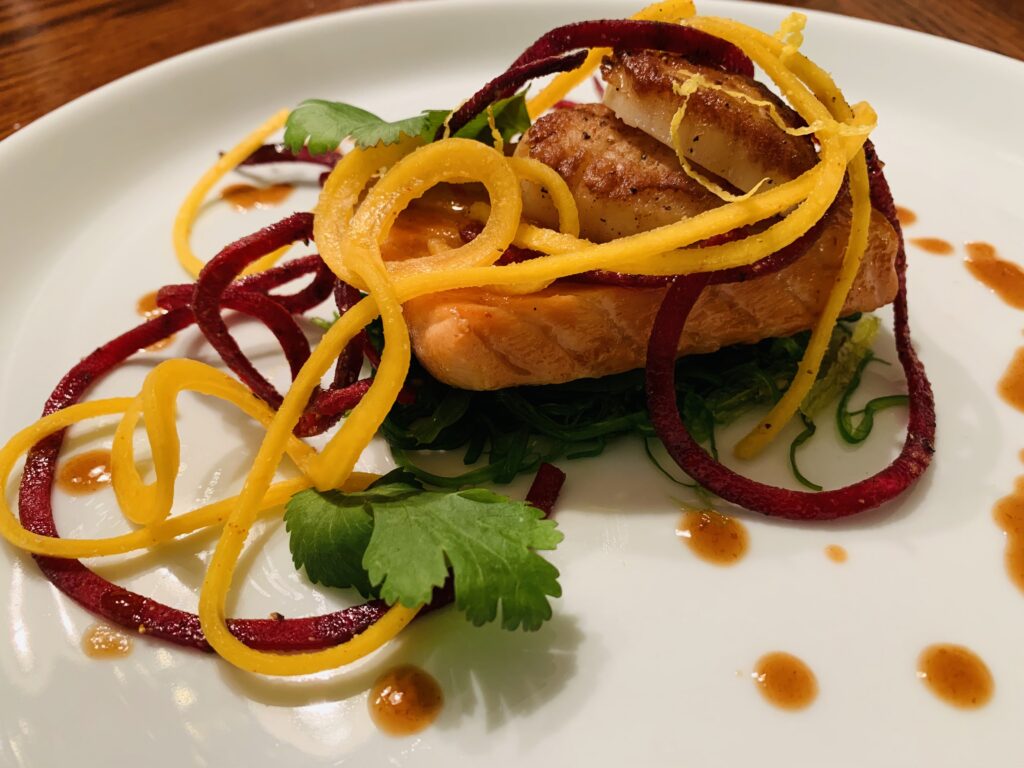
How I Build It (Real Example — Salmon)
Start with the product:
- King or Norwegian salmon
- high fat, clean flavor
Chef move:
👉 cook a small test piece with no seasoning
Then build:
- salt and pepper only
- grill for light char
Balance:
- fresh lemon
Condiment (on the side):
- Greek yogurt
- lemon zest + juice
- cucumber
- fresh tarragon
- salt + pepper
Finish:
- wild rice pilaf
- blanched greens
Done.
Nothing extra.
Everything intentional.
What I Look for While Tasting
Mid-cook, I’m checking:
- natural flavor
- seasoning
- texture
- crust development
- doneness
Not “is it good.”
👉 is it on track
That’s where experience takes over.
How to Fix Flat Food (Simple)
- add acid
- check salt
- stop overcomplicating
The Real Difference
People who chase flavor:
👉 keep adding
Chefs who understand flavor:
👉 control what’s already there
That comes from:
- repetition
- exposure
- discipline
Final Thought
Flavor isn’t about adding more.
It’s about adding less—and making sure everything you do add actually matters.