Most people taste their food. Very few actually know what they’re tasting.
Tasting your food the right way is about understanding balance, recognizing what’s missing, and knowing how to adjust without overcorrecting.
Where I Learned This
I didn’t learn tasting from a book.
I learned it by paying attention.
Watching how food looked.
How it smelled.
How it reacted.
Over time, you start to realize:
👉 tasting isn’t just flavor
👉 it’s reading the entire dish
That awareness develops with repetition—and it ties directly into How Experience Changes the Way You Taste.
What Most People Get Wrong
Most people don’t taste with intention.
They:
- add salt before tasting
- adjust too early
- don’t know what they’re tasting for
Or they go too far.
I remember sitting at a hot pot spot—guy asked if I wanted spice.
I said yes.
Three drops of extract later…
👉 dish was done
👉 couldn’t taste anything
That’s what happens when you don’t understand control.
And it’s exactly why dishes fall apart even when the ingredients are right—something I break down in Why Most Cooking Mistakes Aren’t Technical.
What’s Actually Happening
When I taste food, I’m checking three things:
- balance
- depth
- finish
I ask:
👉 does this make me want another bite?
Then I break it down:
- does it need salt?
- does it need acid?
- is something overpowering?
Then I taste it again as a whole.
Because components matter…
👉 but the full bite tells the truth.
How I Taste My Food (Step-by-Step)
- Look and smell first
→ was it cooked properly? does it smell clean? - First bite (center cut)
→ check doneness, seasoning, and balance - Break it apart
→ taste individual components - Full bite again
→ meat, sauce, starch, vegetable together - Adjust in small moves
→ never overcorrect
How I Know What’s Missing
You know right away.
If it’s right:
👉 everything complements
If it’s off:
👉 something stands out
That’s your signal.
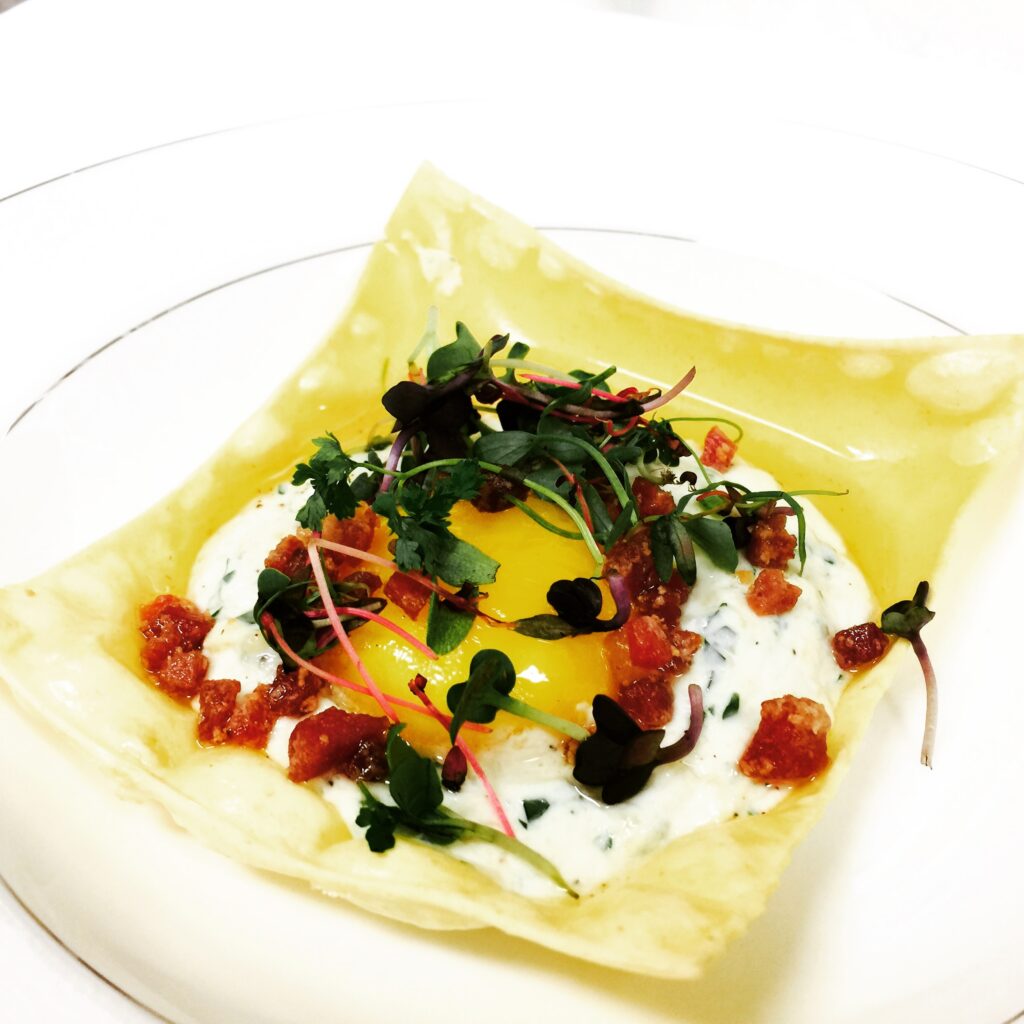
Real Example — Egg Raviolo
Take a dish like this:
- open face egg raviolo
- brown butter
- prosciutto (soft + crisp)
- microgreens
When you taste it, you don’t just eat it.
You evaluate:
👉 is the yolk rich but not heavy?
👉 does the brown butter add depth or dominate?
👉 does the prosciutto bring salt and texture?
👉 do the greens lighten the bite?
Then you take a full bite.
If it works:
👉 it feels like one complete idea
If it doesn’t:
👉 it feels like separate parts
What I Avoid
I don’t:
- over-adjust
- add too many things at once
- chase flavor
Because once you go too far:
👉 you can’t bring it back
So I make small moves.
What Changes With Experience
Over time, you slow down.
You start to:
- notice nuance
- understand combinations
- recognize when something is “right”
What Your Senses Are Doing
You’re not just tasting.
You’re using:
- smell → memory and familiarity
- taste → salty, sweet, sour, bitter
- texture → crispy, creamy, fatty, crunchy
All of it is happening at once.
How to Fix “Off” Food (Simple)
- Taste before adjusting
- Identify the problem
- Make one small change
The Real Difference
People eat food.
Cooks analyze it.
Chefs understand it.