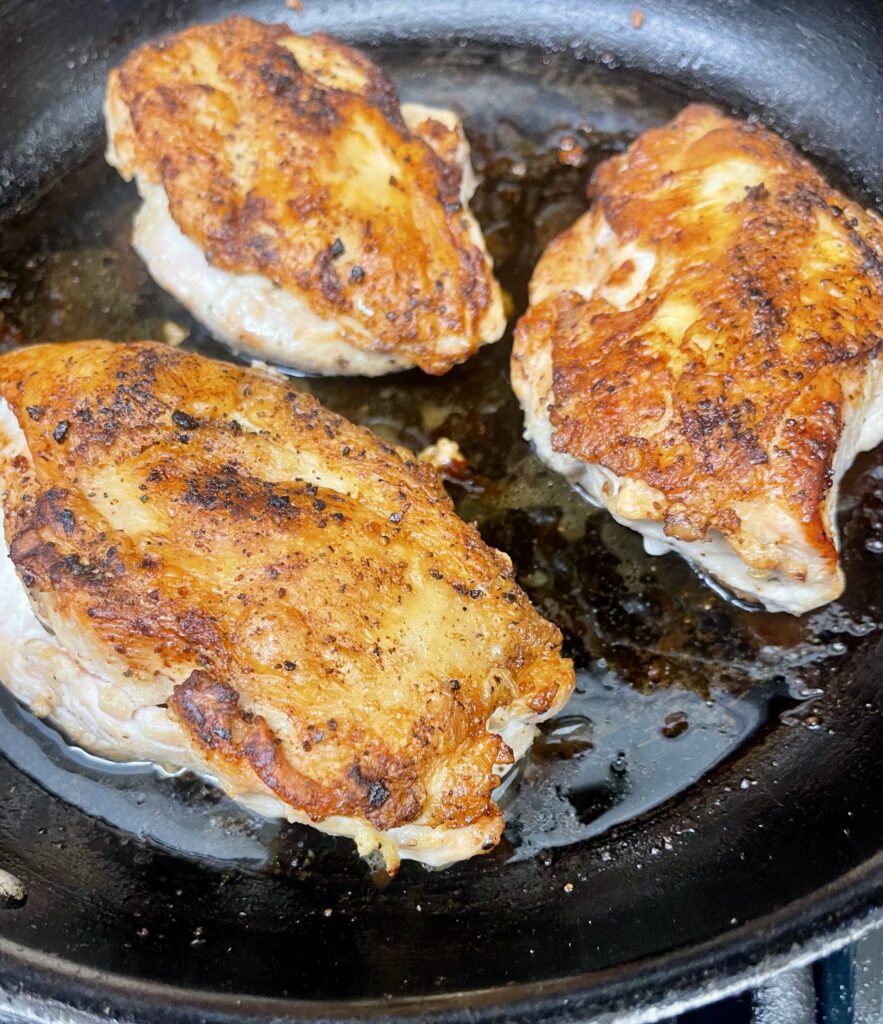
There is something satisfying about a properly cooked chicken breast with deeply browned, crisp skin.
It does not require a complicated marinade, a long ingredient list, or an expensive piece of equipment. What it does require is patience, temperature control, and an understanding of how chicken skin reacts to heat.
For this recipe, I remove the chicken breasts from the bone while keeping the skin intact. I season them simply with kosher salt, freshly ground peppercorn mélange, and granulated garlic.
The chicken starts skin-side down in a cold skillet with a small amount of vegetable oil. Starting with a cold pan gives the fat beneath the skin time to render gradually. That rendered fat helps create the deep color and crisp texture we are looking for without burning the outside before the skin has had time to cook properly.
Once the skin is golden, brown, and delicious, the chicken is turned over and finished in a 375°F oven. After roasting, it rests loosely covered so the juices can settle without trapping enough steam to soften the crust.
Do not throw away the drippings left in the skillet. That concentrated chicken flavor is the beginning of an incredible gravy or pan sauce.
CATEGORY
Everyday Comfort
PREP TIME
10 minutes
COOK TIME
25–30 minutes
RESTING TIME
5–7 minutes
TOTAL TIME
Approximately 45 minutes
SERVINGS
3 chicken breasts
INGREDIENTS
3 skin-on chicken breasts, removed from the bone
Kosher salt, to taste
Freshly ground peppercorn mélange, to taste
Granulated garlic, to taste
1–2 tablespoons vegetable oil, or enough to lightly coat the skillet
INSTRUCTIONS
- Prepare the chicken
Preheat the oven to 375°F.
Remove the chicken breasts from the bone while keeping the skin attached and as intact as possible.
Pat the chicken completely dry with paper towels. Removing surface moisture helps the skin brown and crisp instead of steaming.
- Season the chicken
Season both sides of each chicken breast with kosher salt, freshly ground peppercorn mélange, and granulated garlic.
Make sure the seasoning is distributed evenly across the meat and skin.
- Start with a cold skillet
Add enough vegetable oil to lightly coat the bottom of a cold, oven-safe skillet.
Place the chicken breasts in the skillet skin-side down before turning on the heat.
Starting the chicken in a cold pan allows the fat beneath the skin to render gradually. This creates deeper, more even browning and helps the skin become crisp without burning.
- Render and brown the skin
Place the skillet over medium heat.
Allow the chicken to cook skin-side down without constantly moving it. Let the fat slowly render and the skin develop a deep golden-brown crust.
If the chicken begins browning too quickly, reduce the heat slightly. The goal is controlled browning, not rushing the process.
Continue cooking until the skin is crisp, deeply colored, and releases easily from the skillet.
- Turn and finish in the oven
Turn the chicken breasts skin-side up.
Transfer the skillet to the preheated 375°F oven.
Roast for approximately 20 minutes, depending on the size and thickness of the chicken breasts, or until the thickest part reaches an internal temperature of 165°F.
- Rest the chicken
Remove the chicken from the skillet and place it on a clean plate or cutting board.
Cover it loosely with aluminum foil and allow it to rest for 5–7 minutes before carving.
Do not wrap the chicken tightly. Trapped steam will soften the crisp skin you worked to create.
- Save the pan drippings
Do not discard the browned bits, rendered fat, and juices left in the skillet.
Use the drippings as the foundation for a gravy, cream sauce, wine reduction, or simple pan sauce.
CHEF’S NOTES
Why start chicken in a cold pan?
Starting skin-on chicken in a cold skillet gives the fat beneath the skin time to render before the outside becomes too dark. This helps create evenly browned, crisp skin rather than skin that is burnt in spots and rubbery in others.
Why should the chicken be dry?
Moisture creates steam. If the surface of the chicken is wet, the skin will have a harder time developing a crisp crust. Pat it thoroughly dry before seasoning.
Do I need to move the chicken while it cooks?
No. Let the skin remain in contact with the skillet long enough to develop color. Moving it too early can tear the skin and interrupt the browning process.
How do I know when the chicken is ready to turn?
The skin should be deeply golden brown, crisp, and release from the pan without excessive pulling. If it is sticking badly, it probably needs more time.
Why cover the chicken loosely while it rests?
Resting allows the juices inside the chicken to redistribute. Covering it loosely keeps it warm without trapping enough steam to destroy the crisp crust.
Can I use boneless, skinless chicken breasts?
You can, but they will not produce the same rendered fat or crispy skin. This technique is designed specifically for skin-on chicken breasts.
What can I make with the pan drippings?
The drippings can be used to make chicken gravy, mustard cream sauce, herb pan sauce, white wine sauce, or a simple reduction finished with butter.
STORAGE AND REHEATING
Store leftover chicken in an airtight container in the refrigerator for up to three days.
To help preserve the skin, reheat the chicken uncovered in a 350°F oven until warmed through. Avoid reheating it in a covered container or microwave when possible because trapped steam will soften the crust.
FINAL WORD
Golden-brown chicken skin does not come from rushing the pan.
It comes from controlling the heat, giving the fat time to render, and knowing when to leave the food alone.
Simple seasoning allows the technique to do the work. Kosher salt, freshly ground pepper, granulated garlic, and proper heat are enough to turn an everyday chicken breast into something deeply flavorful.
And when the chicken is finished, save what is left in the skillet.
Those pan drippings are not waste.
They are the beginning of the next layer of flavor.
Cook Slow. Live Steady. Stay Soulful.