For most of my career, I didn’t think there was anything wrong with tying my identity to my work.
After all, work was where I spent most of my time.
Work was where I earned respect.
Work was where I built a reputation.
Work was where I measured progress.
As chefs, business owners, and professionals, we’re often praised for being dedicated. Clients notice. Peers notice. The community notices. Eventually, people begin to associate you with the business itself. In many ways, your success and the success of the business become connected.
The problem is that over time, it becomes difficult to tell where the work ends and where you begin.
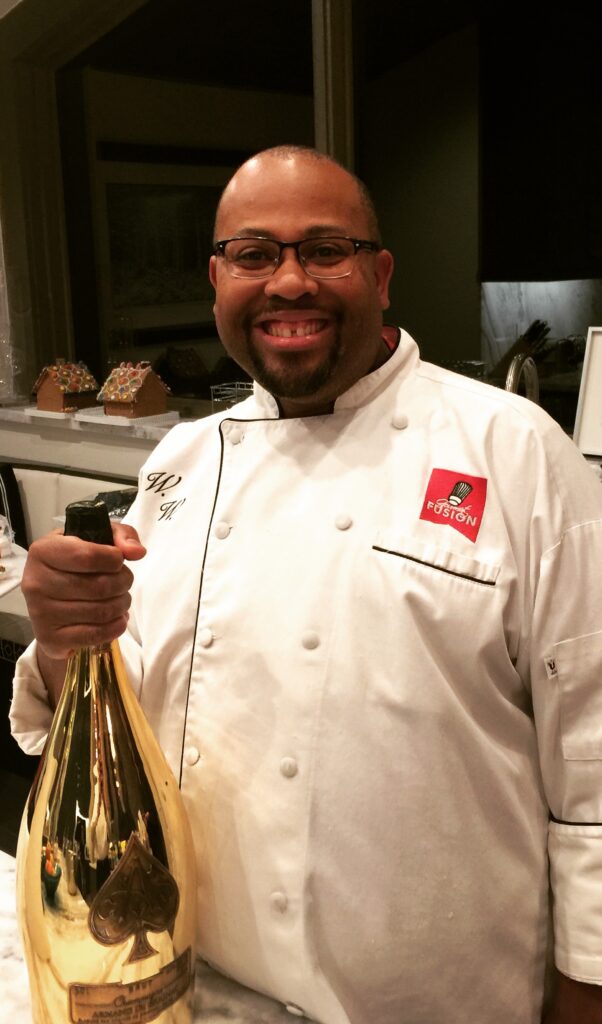
Success can open doors, build reputations, and create opportunities. The challenge is remembering that what you do is only part of who you are.
Why Is It So Easy to Tie Your Identity to Your Work?
Because work provides measurable results.
You know if the restaurant is busy.
You know if sales are up.
You know if clients are happy.
You know if people are talking about your work.
That feedback can be addictive.
The praise feels good. The recognition feels good. The status feels good.
Eventually, you stop seeing work as something you do and start seeing it as proof of who you are.
What Happens When Work Becomes the Only Place You Get Validation?
It becomes lonely.
It becomes unstable.
When you’re emotionally tied to the job, every setback feels personal.
A bad review isn’t just a bad review.
A slow week isn’t just a slow week.
A mistake isn’t just a mistake.
Everything starts feeling like a judgment on you as a person.
That’s when the emotional spiral begins.
Depression.
Anger.
Self-doubt.
Overthinking.
You begin taking things personally that shouldn’t be personal.
The foundation starts to crack.
Sometimes it even shows up as micromanagement. You stop trusting people because you’re afraid of what happens if something goes wrong. Instead of leading, you start controlling.
Why Do Providers Struggle With This So Much?
Because responsibility changes the equation.
When you’re responsible for a team, a family, or a business, everything feels like it’s on the line.
You’re watching food cost.
You’re watching labor.
You’re watching waste.
You’re watching quality.
You’re watching customer satisfaction.
You’re trying to make sure everyone gets paid and everyone is taken care of.
That pressure can make you guard everything closely because you know what’s at stake.
How Do You Know You’ve Crossed the Line?
You can’t let go.
Even on your days off, you’re in the office.
You’re in the kitchen.
You’re answering messages.
You’re checking numbers.
You’re thinking about tomorrow.
You understand there is money on the line and responsibilities attached to the job, but eventually the job becomes everything.
That’s when you’ve crossed the line.
What Happens When Things Slow Down?
This may be the hardest part.
When you’re used to being busy all the time, you don’t know what to do with yourself when things get quiet.
Your brain has been trained to operate at full speed.
Hundreds of thoughts.
Hundreds of decisions.
Hundreds of moving parts.
Then suddenly there is silence.
And instead of enjoying it, you start questioning everything.
You start overanalyzing every decision.
You become hyper-aware of every small problem.
The smallest issue can feel like the beginning of a disaster.
In many ways, that’s what happens when your identity becomes tied to performance.
Can Tying Your Identity to Work Hurt the Work Itself?
Absolutely.
It creates fear.
You start chasing proof instead of progress.
Every dip in the numbers feels catastrophic.
Every setback feels personal.
Instead of building patiently, you start looking for reassurance that everything is working.
If I’m being honest, I’ve caught myself doing this with Plated Soul.
The site is only a few months old.
The numbers are moving in the right direction.
Yet sometimes I find myself reacting to the smallest changes in traffic, impressions, or clicks.
Then I have to remind myself:
“You’re only a few months into this. Relax.”
That perspective matters.
What Does Healthy Pride Look Like?
Healthy pride isn’t caring less.
It’s knowing when to switch roles.
When I walk into the kitchen, my brain shifts into business mode.
When I take off the chef jacket and walk out the door, I try to shift into husband mode, father mode, and family mode.
It doesn’t always work perfectly.
But I keep trying.
I make time to take my kids to school.
I attend school events.
I spend time with my wife.
I take vacations when I can.
I try not to talk about business all the time.
Because I can always make more money.
I can’t get back missed memories.
I can’t get back missed moments.
I can’t relive my children’s childhood.
That’s where values, character, and integrity become more important than productivity.
What Is Success Really?
When I was younger, success looked different.
I was in culinary school during the day and working full-time at night.
I’d come home and practice techniques after work.
Boning chickens.
Making roulades.
Working on sauces.
Smoking meats.
Then I’d bring the results back to school for evaluation.
That season taught me a lot.
But experience has taught me something else.
Success isn’t just money.
Success is knowing you’ve done your best.
Success is having boundaries.
Success is being able to say no.
Success is taking care of your team.
Success is being present for your family.
Success is building something meaningful without losing yourself in the process.
Related Stories
[The Difference Between Cooking to Impress and Cooking to Feed]
[Why I Cook With What I Have: The Skill That Made Me a Better Chef]
Final Thought
I don’t think the goal is to care less about your work.
The goal is to stop asking your work to carry a weight it was never designed to carry.
A job can provide income.
A business can provide opportunity.
A craft can provide purpose.
But none of them can tell you who you are.
That’s a question every person eventually has to answer for themselves.