Why Experienced Cooks Stop Measuring Everything
Experienced cooks stop measuring everything because repetition teaches them how ingredients behave. Instead of relying on measuring cups, they rely on timing, texture, aroma, color, sound, instinct, and constant tasting to guide the cooking process.
When I was younger, I watched my mom and dad cook without measuring much of anything. My mom had cookbooks and stacks of magazines like Southern Living, but even then, recipes were more like starting points than strict law. Later on, restaurant kitchens, mentors, PBS cooking shows on Saturday mornings, and years of talking to other cooks pushed that understanding even further.
Most experienced cooks are not guessing.
They are paying attention.
That is the difference people miss.
Cooking without measuring is not about throwing structure away. It is about understanding the structure well enough to move around inside it without getting lost.
Even now, after years in kitchens and catering, I still get things wrong sometimes. A dish can end up over-seasoned. Timing can be off. Texture can miss the mark.
The basics still matter.
That never changes.
What Most People Get Wrong
Most people think cooking by feel means freedom.
It does not.
It means responsibility.
A lot of newer cooks depend completely on recipes because they are afraid to trust themselves. The problem is they never move past the recipe long enough to understand why it works in the first place.
I always tell people:
Cook it once the way the recipe says.
Then start messing with it.
That is where your cooking actually begins.
Most experienced cooks did not learn this overnight. It came from repetition, mistakes, experimenting, tasting, and constantly adjusting.
Not everything I cook turns out perfect either. That is part of cooking.
Trial and error is built into the process.
What’s Actually Happening
When experienced cooks stop measuring, they are still measuring mentally.
They are tracking:
- timing
- texture
- sound
- color
- aroma shifts
- moisture
- heat behavior
They are using all five senses at once.
You hear when onions move from sweating to caramelizing.
You smell when garlic is about to go too far.
You see when a sauce tightens up correctly.
You feel resistance change in meat as it cooks.
That is not guessing.
That is awareness built through repetition.
And tasting is still the real skill most people avoid developing.
A lot of people season food once and hope for the best. Experienced cooks keep tasting throughout the process because flavor changes as heat, fat, acid, and moisture develop.
This connects directly to [How Experience Changes the Way You Taste] and [How I Build Flavor Layers Without Overcomplicating a Dish] because learning flavor is really about learning awareness.
How I Do It
A lot of my cooking came from watching people.
Family. Mentors. Restaurant cooks. PBS chefs on Saturday mornings. Conversations in kitchens. Reading cookbooks. Watching how other cultures approach flavor and ingredients.
I still enjoy walking through:
- Indian markets
- Asian markets
- African markets
- Mexican markets
just to look at ingredients, taste food, and experiment.
There is no pressure there.
Just curiosity.
That is one of the best ways to grow as a cook.
You start understanding patterns instead of memorizing recipes.
That is how you slowly develop your own voice in the kitchen.
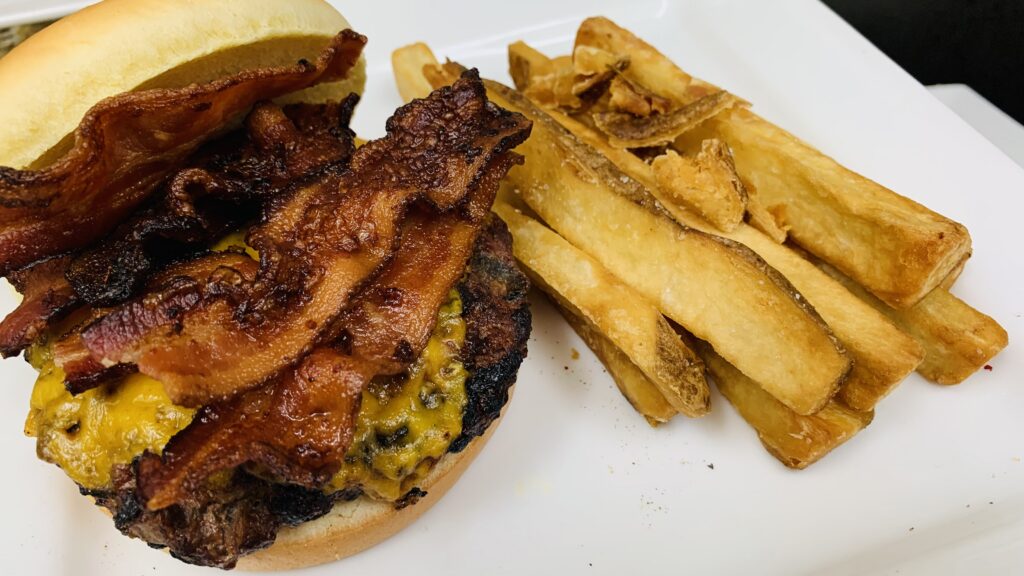
A burger is a good example of this for me.
Good 80/20 ground beef. Kosher salt. Fresh cracked pepper. Granulated garlic. A little dehydrated onion. Worcestershire sauce. Crisp bacon. Sharp cheddar. Homemade fries from Idaho russet potatoes.
Simple food.
But simple food exposes everything:
- seasoning
- timing
- texture
- heat control
- balance
You cannot hide behind complexity.
How To Fix It
If you want to stop depending completely on measurements, start with the basics first.
Learn:
- salt
- pepper
- heat control
- tasting
- timing
- texture
Do not abandon recipes immediately.
Use them to understand structure.
Then slowly start adjusting:
- acidity
- herbs
- spices
- cooking times
- fat levels
- textures
And most importantly:
pay attention while you cook.
Cooking without measuring is the wild side of cooking.
Cooking without paying attention is something completely different.
That is just carelessness.
This also ties into [Why Most Cooking Mistakes Aren’t Technical] because most kitchen problems come from awareness and attention long before they come from lack of talent.
Quick Breakdown
Cooking without measuring DOES mean:
- trusting repetition
- using your senses
- tasting constantly
- understanding ingredients
- learning patterns
Cooking without measuring DOES NOT mean:
- ignoring basics
- refusing structure
- seasoning randomly
- avoiding recipes completely
- cooking carelessly
Closing
Most experienced cooks are not cooking from memory alone.
It is usually a combination of:
- repetition
- observation
- mistakes
- book knowledge
- conversations
- travel
- curiosity
- instinct
Over time, cooking becomes less about following directions exactly and more about understanding what the food is trying to do.
That is when recipes stop feeling like rules and start feeling like foundations.