Why Meat Sticks to Stainless Steel—and When to Leave It Alone
Put a piece of meat into a hot stainless-steel pan and one of the first things it may do is stick.
For a lot of home cooks, that’s when the panic starts.
They grab the tongs. They try to lift the meat. It doesn’t move. So they pull a little harder.
Now part of the crust is stuck to the pan, the presentation side of the steak or fish is torn apart, and something that was cooking perfectly well thirty seconds ago suddenly looks like a disaster.
But here’s something I learned over years of cooking professionally:
Sometimes sticking doesn’t mean you’ve made a mistake. Sometimes it means you need to leave the food alone.
That was a lesson I had to learn myself.
Why Meat Sticks to Stainless Steel
When raw meat first hits hot stainless steel, the proteins on the surface interact with the metal. Stainless steel may look perfectly smooth, but at a microscopic level, that cooking surface isn’t perfectly flat.
During those first moments of cooking, some adhesion between the protein and the pan is normal.
The mistake is assuming that because the meat won’t immediately lift from the pan, something has gone wrong.
I’ve watched inexperienced cooks do it plenty of times. The meat sticks, they panic, and immediately start trying to get underneath it with a spatula.
That’s usually when the real damage begins.
Give the heat time to work.
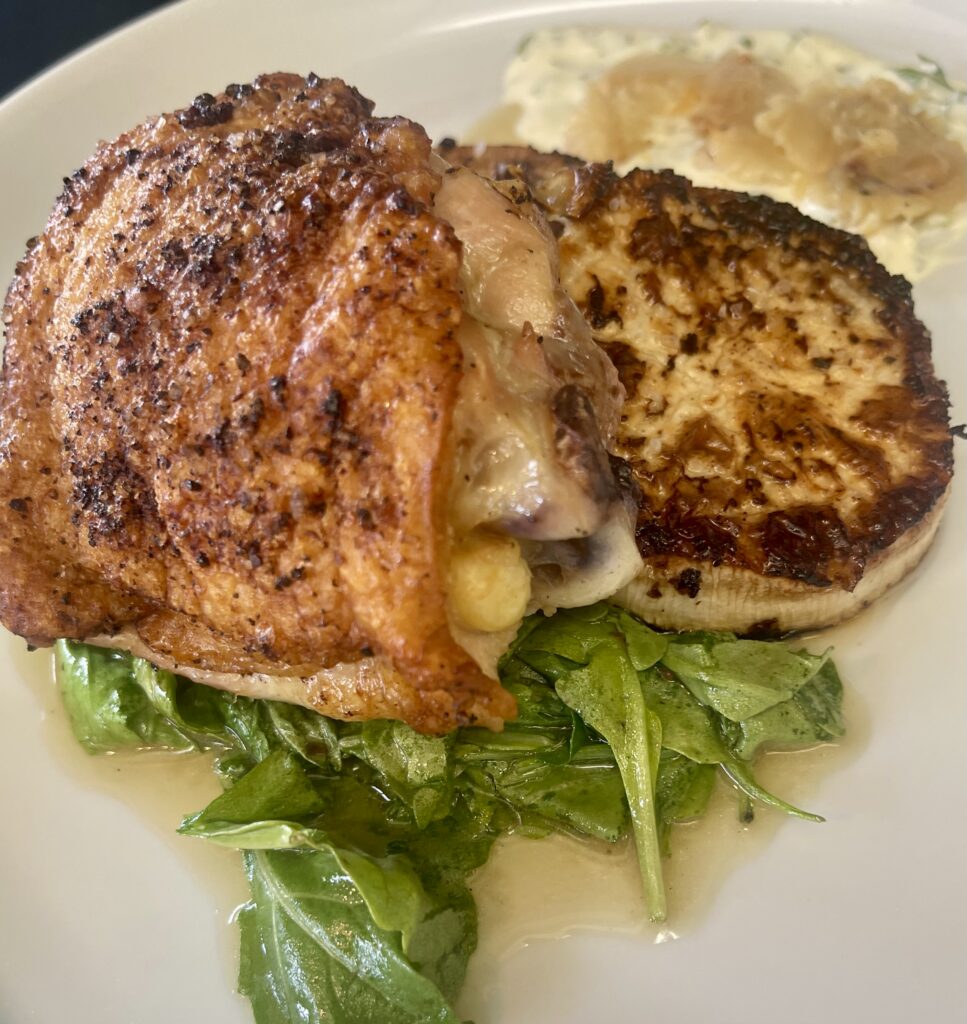
As surface moisture evaporates, the proteins change and browning develops. Once a proper crust forms, the meat will usually release much more easily from the stainless steel.
That’s one of the first lessons you have to learn about cooking with this kind of pan:
Don’t fight it.
Start With a Properly Heated Pan
Before that meat ever touches the stainless steel, I want the pan properly heated.
In a professional kitchen, I’m not standing there dropping water into the pan and watching droplets dance around like marbles. When you’ve got a line full of tickets, you learn to read heat with your senses.
I put a dry stainless-steel pan over medium-high heat and let it come up to temperature.
I can feel the heat coming off the surface. Then I add the oil.
Watch the oil.
As it heats, it becomes loose and begins to shimmer and ripple across the surface. Depending on the oil you’re using, you may eventually see the faintest wisp of smoke.
That’s my cue that it’s time to cook.
The exact temperature isn’t the point. Learning to recognize what a properly heated pan looks and feels like is.
And before that protein goes into the pan, seasoning matters too. #1: How to Season Food Properly: A Professional Chef’s Guide walks through how I approach seasoning so you’re building flavor before the sear ever begins.
Dry the Meat Before It Hits the Pan
Here’s another mistake I see all the time.
Someone takes a steak, pork chop, chicken breast or piece of fish straight out of the package and puts it into the pan while the surface is still wet.
Water is the enemy of a good sear.
Before serious browning can happen, that surface moisture has to evaporate. Until it does, you’re spending energy creating steam instead of developing the deep brown crust you’re looking for.
That’s how you end up with pale, gray meat instead of a proper sear.
Pat the surface thoroughly dry with paper towels.
I want the meat dry enough that when it touches that hot pan, the heat can immediately start working on the surface.
Dry meat.
Hot pan.
Enough cooking fat to help transfer heat evenly.
Then put the meat down.
And leave it there.
Stop Touching the Damn Food
This might be the hardest part.
Home cooks love touching food.
Flip it.
Move it.
Lift the corner.
Push it around.
Check it.
Check it again.
Sometimes we convince ourselves that movement means we’re cooking.
It doesn’t.
Early in my career, I was guilty of the same thing.
Professional kitchens move fast. When you’re young and trying to prove yourself, moving fast can feel like working hard. I wanted to flip things, shake pans, poke food and control everything happening in front of me.
Then one night, an old-school chef grabbed my arm.
He looked at me and said:
“Stop fighting the food. Let the heat work.”
That stayed with me.
Because standing there and doing nothing can require more discipline than constantly rattling the pan.
Let the Pan Tell You When It’s Ready
This is where cooking starts becoming less about following instructions and more about learning to read food.
As the surface cooks and a crust develops, the relationship between the meat and the pan changes.
Give the meat a gentle nudge with your tongs.
If it still feels firmly attached, don’t start tearing at it.
Give it more time.
When that crust has developed properly and the meat is ready to turn, you’ll often feel the difference immediately. Instead of fighting you, it moves and releases much more readily.
That’s information.
The pan is talking to you.
If it resists, it’s essentially saying:
I’m not done yet.
If it releases:
Now we’re ready.
Learning to recognize those cues is part of becoming a better cook.
It’s something I talk about in#2: The Biggest Mistake People Make When Cooking Proteinbecause protein isn’t something you should blindly cook by the clock. Heat, moisture, thickness and technique all matter.
You have to pay attention to what the food is telling you.
When Sticking Actually Means There’s a Problem
There’s a difference between normal initial sticking and meat that isn’t searing properly.
When something isn’t working, I usually start with four things.
The meat was too wet.
Surface moisture encourages steaming and interferes with the browning you’re trying to create.
The pan wasn’t hot enough.
You need enough heat in the pan to maintain a strong cooking temperature when that cooler piece of meat hits the surface.
You moved it too soon.
This is probably the biggest mistake. You interrupted the process before the crust had time to develop.
You didn’t use enough cooking fat.
Oil isn’t there only for flavor. It helps transfer heat between the hot metal and the uneven surface of the food.
Fix those four things and stainless steel becomes much easier to understand.
What Happens When You Force the Meat Off the Pan
This is where impatience costs you.
If the meat is still firmly attached and you force a spatula underneath it, you can tear away the very surface you’re trying to create.
Part of that beautiful brown crust stays glued to the pan.
Now you’ve got an uneven, splotchy surface instead of the deep mahogany sear you wanted.
You can also damage delicate proteins like fish badly enough that the entire presentation side comes apart.
You took a beautiful piece of meat and turned it into cat food because you couldn’t keep your hands off it.
Sometimes the fix isn’t another cooking trick.
It’s patience.
Why I Still Choose Stainless Steel
At this point, somebody might ask the obvious question:
If stainless steel requires this much attention, why not just use nonstick?
Because I don’t always want nothing to stick.
I want fond.
Those browned bits left behind after properly searing meat contain concentrated flavor.
Take the meat out of the pan and look at what’s left behind.
That’s not necessarily something to scrub away.
That’s the beginning of your sauce.
Add wine, stock or another liquid and deglaze the pan. As that liquid hits the hot surface, those browned bits loosen and become part of the sauce.
Add aromatics.
Reduce it.
Finish it with butter if that’s where you’re going.
Suddenly, what looked like a dirty pan becomes a restaurant-quality sauce.
That’s one reason stainless steel is such a workhorse in professional kitchens. It handles high-heat cooking, develops excellent browning and gives you the opportunity to keep building flavor after the protein leaves the pan.
Nothing gets wasted.
Cooking Without Constantly Watching the Clock
The more experience you get in a kitchen, the less you depend exclusively on minutes and temperatures to tell you what’s happening.
You start using your eyes.
Your ears.
Your nose.
Your hands.
You notice the sound coming from the pan. You watch the edges of the meat change. You recognize how the oil behaves. You feel whether the protein is still holding onto the surface.
That’s why #3: How to Tell When Food Is Done Without a Timer belongs with this lesson.
I’m not telling you to throw away your thermometer or ignore food safety.
I’m telling you to develop the other senses that make you a better cook.
A recipe can tell you approximately how long something should take.
The food tells you what’s actually happening.
Sometimes Better Cooking Means Doing Less
That chef grabbing my arm all those years ago taught me something bigger than how to sear a piece of meat.
Movement isn’t the same thing as progress.
Cooking requires action, but it also requires restraint.
You have to know when to season.
When to increase the heat.
When to lower it.
When to flip.
When to baste.
When to pull something from the pan.
And sometimes you need to know when to put the damn spatula down and let heat, time and metal do their jobs.
So the next time you put a steak, pork chop, chicken breast or piece of fish into a stainless-steel pan and it grabs onto the surface, don’t immediately assume you’ve done something wrong.
Pay attention.
Give it time.
Give it a gentle nudge.
And if that pan isn’t ready to give your meat back yet?
Leave it alone.
Because sometimes becoming a better cook isn’t learning what else to do.
It’s learning when to stop doing anything at all.
Cook Slow. Live Steady. Stay Soulful.